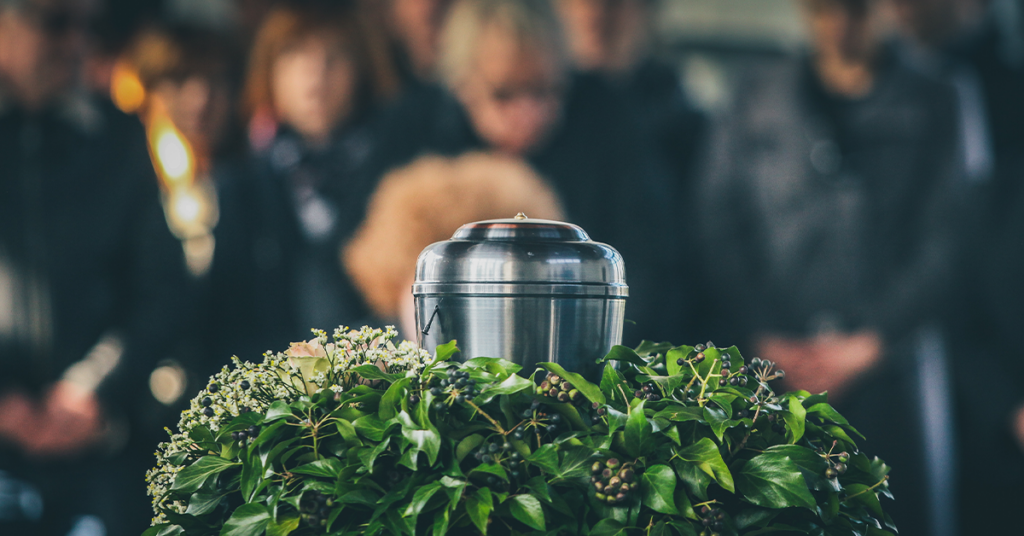
End-of-life planning is one of those conversations most of us put off — and then suddenly need to have. For families weighing their options, cremation has become an increasingly common choice, now accounting for more than half of all dispositions in the United States. But like any significant decision, it comes with trade-offs worth understanding clearly before committing.
Here’s a balanced look at what cremation offers, where it falls short, and one option that may reframe the decision entirely for families facing financial pressure.
The Case for Cremation
Cost. Traditional burial — casket, vault, cemetery plot, funeral service — can easily run $8,000 to $12,000 or more. Cremation is typically a fraction of that. Direct cremation, which skips the formal funeral service and moves straight to cremation, is the most affordable conventional option, often ranging from $700 to $2,500 depending on location and provider.
Flexibility. Cremation doesn’t require immediate decisions about memorialization. Families can take time — weeks, months, or longer — before deciding what to do with the remains. Ashes can be kept, scattered in a meaningful location, divided among family members, incorporated into jewelry, or interred in a columbarium. That flexibility can be genuinely comforting for families who aren’t ready to make permanent choices under grief.
Space. With cemetery land in limited supply in many urban and suburban areas, cremation removes the need for a burial plot. For families without existing cemetery arrangements, this eliminates one layer of logistical complexity and recurring maintenance costs.
Environmental footprint — relative to conventional burial. Compared to traditional burial with embalming chemicals, concrete vaults, and hardwood caskets, cremation has a lighter land impact. It doesn’t require ongoing use of cemetery land or the chemical treatment of the body. Many families making environmentally conscious choices find it a more acceptable option than conventional burial, though it isn’t without its own environmental considerations (more on that below).
The Case Against Cremation
It isn’t emission-free. Conventional flame cremation burns natural gas or propane for two to three hours at temperatures exceeding 1,400°F. That process releases carbon dioxide, and in bodies with dental amalgam fillings, mercury vapor. For families with strong environmental values, this is a real consideration rather than a minor footnote.
It’s irreversible. Once cremation occurs, there’s no opportunity to revisit the decision. For families with religious or cultural traditions that place significance on bodily integrity — or who simply feel uncertain — the finality can be a source of lasting discomfort. Green burial alternatives, by contrast, allow the body to return to the earth intact.
Memorialization can feel less anchored. Many families find that having a fixed physical place — a grave, a marker, a location they can return to — provides genuine comfort over time. Cremation can make that harder to achieve, particularly if families disagree about where remains should go or if ashes are scattered in a location that becomes inaccessible later.
It still carries a cost. Even direct cremation involves fees for transportation, documentation, and the cremation itself. For families already under financial strain from a sudden loss, even a modest bill can arrive at the worst possible moment.
A Third Option Worth Knowing About
For families in the St. Petersburg area who are weighing cremation primarily for financial reasons, it’s worth knowing that whole-body donation programs offer a path to free cremation in St. Petersburg that most people aren’t aware of. Accredited nonprofit organizations — including those that serve the Tampa Bay region — facilitate whole-body donation to medical science, covering all associated costs: transportation, documentation, the cremation itself, and return of the ashes to the family at no charge. For families who might otherwise face an unexpected bill of $2,000 or more, this can be a significant form of relief.
The donation itself goes to medical education and research — training surgeons, advancing device development, supporting pharmaceutical studies. Cremated remains are typically returned to the family within four to six weeks. Registration can be completed in advance as a future pledge, which removes the pressure of making decisions in the acute period of loss. The key is ensuring the program you choose is accredited by the American Association of Tissue Banks (AATB), which sets and enforces ethical standards across the field.
Making the Decision
No single end-of-life choice is right for everyone. Cremation makes good sense for many families — it’s affordable, flexible, and logistically straightforward. For others, the environmental impact of flame cremation, the irreversibility, or the absence of a fixed memorial site may point toward a different option.
The most important thing is that the decision gets made — and documented — before it becomes urgent. Families who know their loved one’s wishes in advance are spared the weight of consequential choices made under grief. Whether your preference is conventional cremation, green burial, aquamation, or whole-body donation, putting it in writing is one of the most practical gifts you can leave behind.

Brytharok Kynal specializes in analyzing emerging tech trends and their societal impact, with a particular focus on artificial intelligence and digital transformation. His incisive writing style combines deep technical understanding with accessible explanations that help readers navigate complex innovations.
Known for taking abstract concepts and grounding them in practical, real-world applications, Brytharok brings a balanced perspective to discussions about technology’s role in shaping our future. When not writing, he explores creative applications of new technologies and follows developments in computational creativity.
His articles bridge the gap between cutting-edge developments and everyday implications, helping readers stay informed about transformative technologies shaping our world.